By Amit & Animesh, Co-founders, Nuvika Technologies
India’s cloud market is booming. Public cloud spending crossed $10 billion and is projected to grow at 25-30% year over year. AWS, Azure, and GCP are all expanding their India regions. Every company from 10-person startups to conglomerates is migrating workloads to cloud.
But here’s what nobody’s talking about: Indian companies are overpaying for cloud at the same rate as everyone else - 25-30% waste - while having fewer tools and less institutional support to fix it.
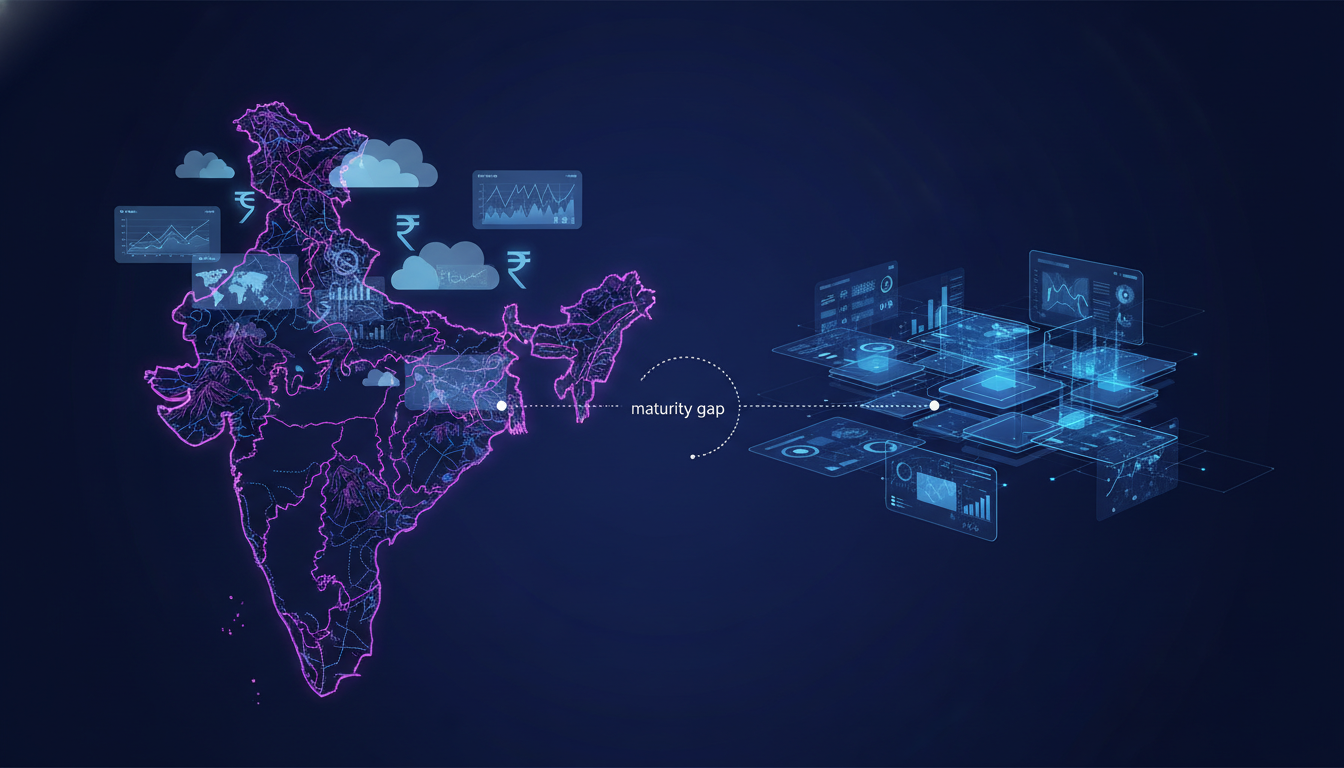
The global FinOps movement has matured in the US and Europe. Dedicated FinOps teams, established tooling ecosystems, and a community of practitioners sharing best practices. India is 3-5 years behind - and that gap is costing Indian businesses crores every year.
This post explains why the gap exists, why it hits Indian companies differently, and what can be done about it.
The Indian Cloud Landscape
India’s cloud adoption pattern has some unique characteristics that amplify the waste problem:
Rapid adoption without FinOps maturity. Indian companies are adopting cloud faster than they’re building cost management practices. The typical pattern: a CTO gets budget approval for cloud migration, the engineering team moves workloads, and nobody establishes cost governance until the CFO starts asking questions 12-18 months later. By then, the waste is baked in.
Heavy reliance on managed service partners. The Indian market has a deep ecosystem of managed service partners - from the large system integrators to boutique cloud consultancies. Many Indian companies outsource their entire cloud operations to these partners. As we’ve discussed, these partners earn a margin on cloud spend, creating a structural disincentive to optimize.
Pricing in USD, budgets in INR. Cloud services are priced in US dollars (or dollar-equivalent regional pricing). Indian companies budget in rupees. Every fluctuation in the exchange rate changes the effective cost - and most companies don’t factor this into their cloud budgeting. A 5% rupee depreciation is an invisible 5% cost increase on the cloud bill.
Limited FinOps tooling built for India. Most enterprise FinOps tools are built for US/European markets, priced in USD, and start at $25,000-$50,000 per year. That’s ₹20-40 lakhs per year - prohibitive for most Indian mid-market companies. The irony: the companies that need cost optimization the most can’t afford the tools to do it.
Dev/test environments running 24/7. India’s development teams are often distributed - teams in Bangalore, Hyderabad, Pune, with some overlap with US teams. The result: dev/test environments run around the clock because “someone might need it.” In practice, they sit idle for 12-16 hours a day.
The Managed Partner Problem - Indian Edition
The managed partner dynamic is especially pronounced in India.
India has one of the world’s largest ecosystems of cloud managed service providers. Companies like Rackspace, Wipro Cloud, TCS, Infosys, and dozens of smaller shops manage cloud environments for thousands of Indian businesses.
The business model is almost universally margin-based: the partner earns 8-15% of managed cloud spend. Some add per-resource management fees on top.
For a company spending ₹20 lakhs/month on cloud, the partner earns ₹1.6-3 lakhs/month. Optimizing the customer’s cloud spend to ₹14 lakhs/month (a 30% reduction) would cut the partner’s revenue by ₹48,000-₹90,000 per month. Per customer.
Indian companies tend to have longer, more relationship-driven vendor partnerships. Questioning the partner’s cost optimization diligence feels like questioning the relationship. The result: the question doesn’t get asked.
This isn’t unique to India. But the cultural dynamics - relationship-driven business, hierarchy-conscious communication, reluctance to challenge established partnerships - make it harder for Indian companies to push back.
The SLA Credit Gap
The SLA credit problem is arguably worse in India than globally.
Many Indian companies purchase cloud through partners or resellers rather than directly from the provider. This adds a layer between the customer and the SLA claim process. When an SLA breach occurs, the customer may not even have direct access to the support portal required to file a claim.
Additionally, Indian companies are less likely to have dedicated teams monitoring provider SLAs. In US enterprises, a FinOps team or Cloud Center of Excellence might track this. In Indian mid-market companies, nobody does.
The result: Indian companies have lower SLA credit recovery rates than their global counterparts, despite experiencing the same (or potentially more frequent) service disruptions on India-region infrastructure that’s still maturing.
What Indian Companies Specifically Need
Having spent 20 years helping Indian companies navigate technology decisions, the pattern is clear. Indian companies don’t need another enterprise FinOps tool priced for Silicon Valley budgets. They need:
Affordable tooling. Pricing that makes sense for companies spending ₹2-50 lakhs/month on cloud, not tools that cost as much as the savings they find.
Indian rupee reporting. Bills come in USD; boards expect reports in INR. The conversion, trending, and budgeting should happen automatically.
Support in Indian timezones. A tool built by a team that’s available during Indian business hours, understands Indian business practices, and speaks the language - literally and culturally.
Independence from managed partners. An independent second opinion that can validate (or challenge) what the managed partner is reporting. Not as a replacement, but as a verification layer.
SLA credit recovery automation. Because if global companies struggle to claim credits, Indian companies - often one layer removed from the provider - have even less chance without automation.
Multi-cloud from day one. Indian companies frequently use Azure (Microsoft relationship through licensing), AWS (startup ecosystem, specific services), and GCP (data analytics, AI/ML) simultaneously. A tool that only covers one cloud is only solving a third of the problem.
Why We Built Fintropy in India, for India
Animesh and I are based in Mumbai. We built Fintropy specifically because we saw that the FinOps tooling gap hits Indian companies harder than anyone acknowledges.
Our pricing is designed for Indian mid-market companies - not adapted from a US price list. Our support is in Indian timezones. Our reporting handles INR natively. Our 497 rules cover the services that Indian companies actually use across AWS, Azure, and GCP.
We also built Fintropy to be independent - no partnership with any cloud vendor or managed service provider. When we scan your environment, our only incentive is to find savings. The more we find, the more value we deliver. There’s no conflicting margin, no vendor relationship to protect, no reason to leave any stone unturned.
And because many Indian enterprises - banks, government organizations, regulated industries - have strict data residency requirements, Fintropy offers a private deployment option. The appliance runs inside your own cloud subscription. Your billing data and resource metadata never leave your environment.
The Opportunity
Here’s the optimistic view.
Indian companies are 3-5 years behind in FinOps maturity. That sounds like a problem - and it is. But it’s also an opportunity. The first companies to get this right will have a structural cost advantage over their competitors.
If Company A and Company B both spend ₹50 lakhs/month on cloud, and Company A optimizes to ₹35 lakhs/month while Company B doesn’t - Company A has an extra ₹1.8 crore per year to invest in product, people, or growth. That’s not a one-time saving. It compounds every year.
The companies that move first on FinOps aren’t just saving money. They’re buying runway, competitive advantage, and the ability to invest where their competitors can’t.
And the person who brings that insight to the company - the CFO who finds the savings, the CTO who implements the governance, the CEO who makes the decision - becomes the most valuable person in the room.
What You Can Do Today
Step 1: Ask your managed partner one question: “What percentage of our cloud resources were included in your last cost optimization review, and how many SLA credits have you claimed on our behalf in the last 12 months?” The answer - or the hesitation before the answer - tells you everything.
Step 2: Run your cloud bill through basic analysis. What services cost the most? How has the total trended over the last 6 months? Is it growing faster than your business?
Step 3: Consider an independent scan. Whether it’s Fintropy or another tool, get a second opinion from someone who doesn’t earn a margin on your spend.
The FinOps gap in India is real. But it’s closable. And the companies that close it first win.
Fintropy is built in India, for Indian companies, with global capability. 497 cost rules across AWS, Azure, GCP, Kubernetes, and VMware. Automated SLA credit recovery. FOCUS 1.2 billing normalization. Available now - sign up at fintropy.nuvikatech.com or get it on Microsoft Marketplace. Learn more at nuvikatech.com/Fintropy_Overview.html